

Leo 2B / 4B reasoning models
Small models, real intelligence
Compact AI tuned for reasoning — not just generation. Runs on classroom-grade hardware and aimeHUB locally, so every school gets capable AI without a data-centre bill.
AI tutors and teaching assistants tuned to your country's curriculum, your teachers' ways of working and the standards your students are actually being assessed against.
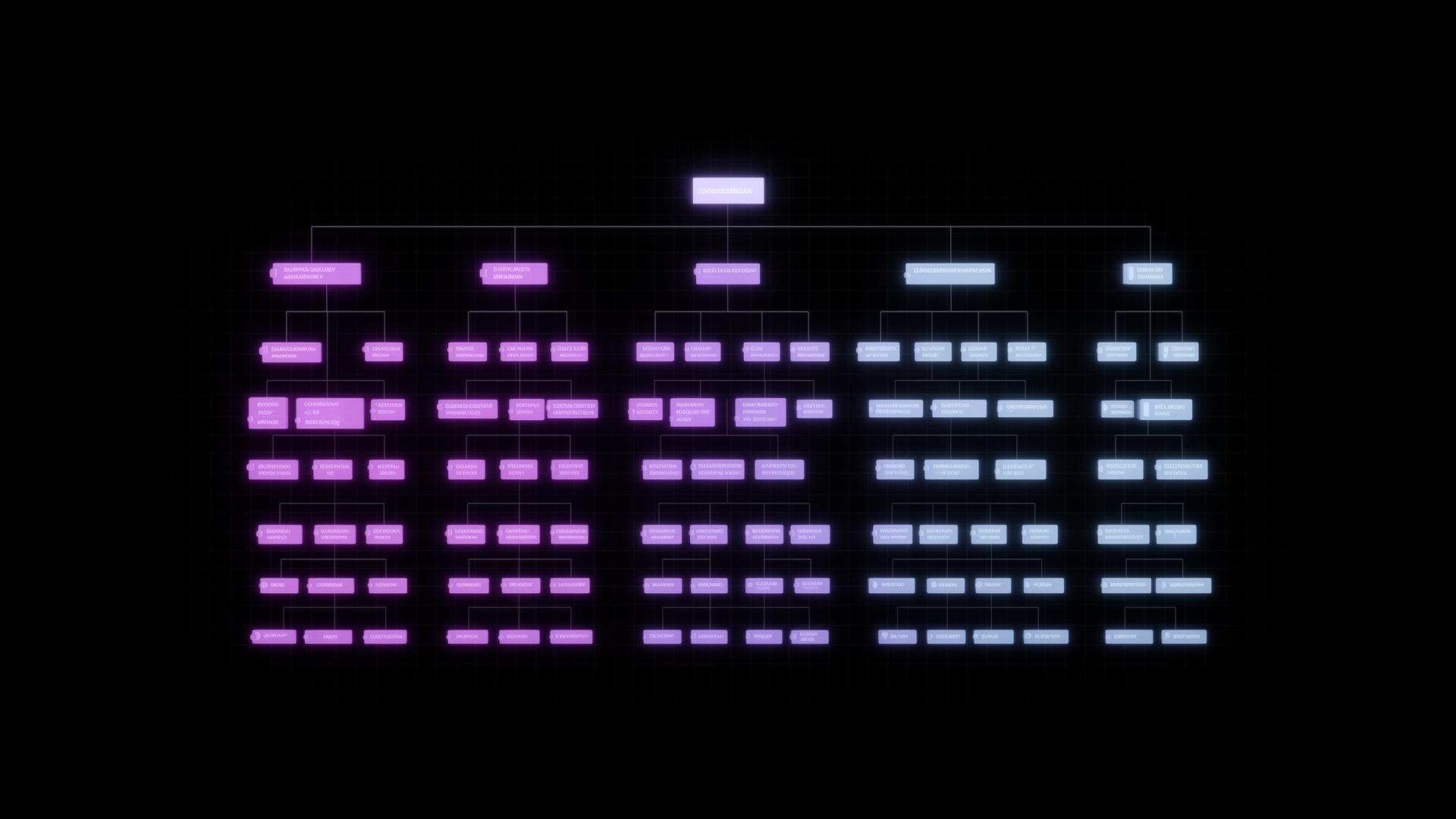
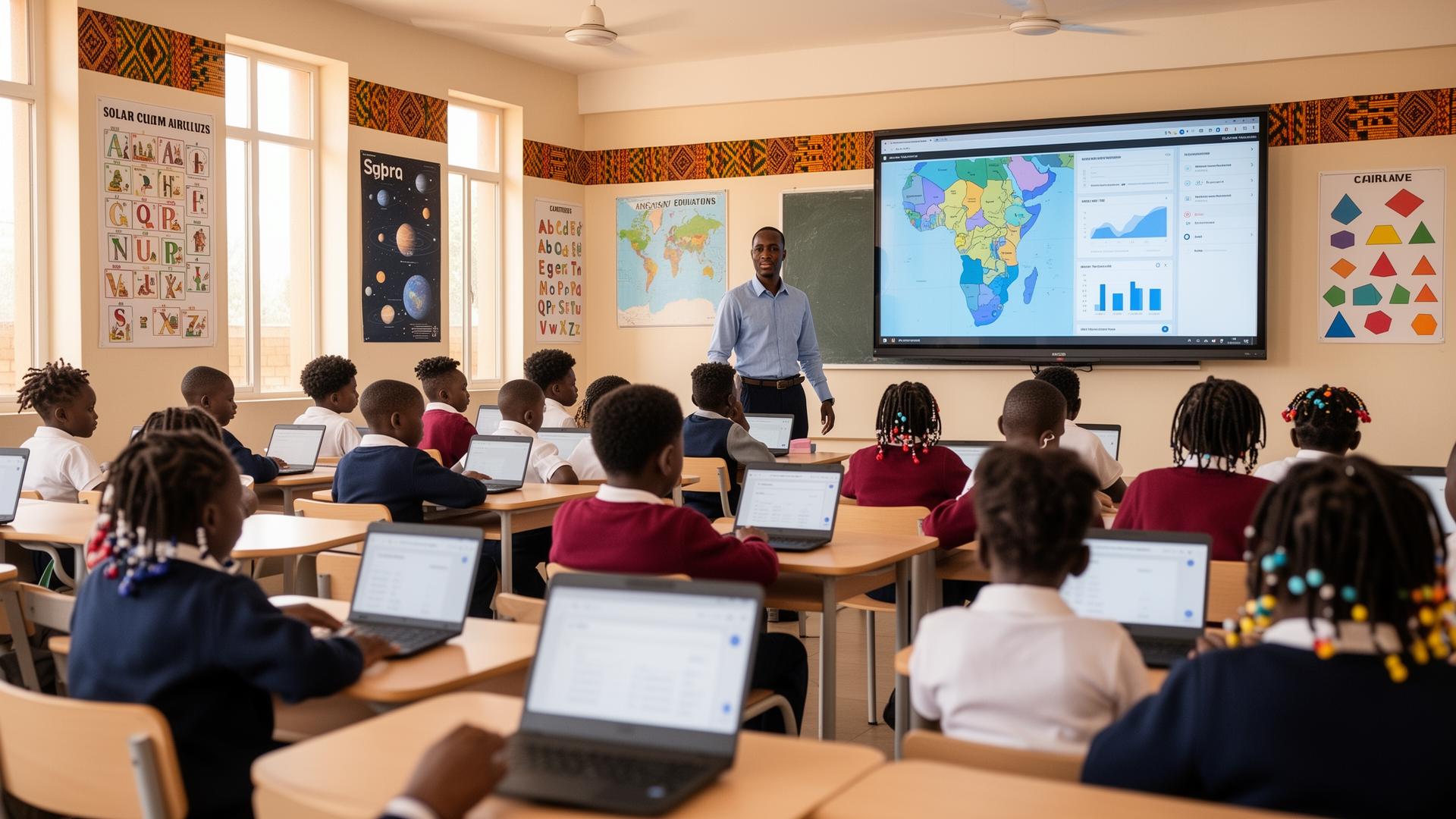
Classroom AI delivered through the lesson — guided by the teacher, not bolted on as a side app.
Explanations and examples are grounded in your country's syllabus, standards and grade-level outcomes.
Designed around lesson planning, scaffolding, marking and feedback — not just chat.
Reasoning that follows how maths, science and language are actually taught — step by step.
Pace and difficulty adjust to real progress against the curriculum — not just clicks or time-on-app.
Used by teachers and students inside the lesson flow — not as a separate consumer app.
Formative and summative assessment plugged into the AI loop and into ministry reporting.
Outputs map directly to your country's frameworks, exam boards and curriculum codes.
Strong support for national languages, dialects and bilingual classrooms.
What sets NDX apart from generic AI chatbots and eduAI tools: the whole platform is built around your country's curriculum — every objective, every assessment, every AI response traceable back to it.
Subjects, units and learning outcomes mapped to your national curriculum — auditable by ministry teams.
Direct links to ministry frameworks, exam boards and grade progressions, refreshed each curriculum cycle.
Explanations and sequencing follow the curriculum, not a generic chatbot's best guess. Every response is traceable to a learning objective.
Formative and summative assessment treated as part of the platform, with item-level evidence teachers can act on.
Follow how students are doing against the curriculum — mastery, not just clicks or time-on-app.
Local versions per country, region and language — without forking the platform or losing standards alignment.
We didn't set out to build another AI product. We set out — from a deep understanding of how classrooms, teachers and ministries really work — to build a new category: educational intelligence. Small, specialised, local, and accountable to the people who have to teach with it.
Hyperscale AI labs optimise for advertising-scale inference, English-speaking power users and always-on bandwidth. None of those assumptions hold inside a Year 4 classroom in an emerging market — and no amount of API access changes that.
Children, teachers and ministries don't need a more eloquent chatbot. They need reasoning aligned to a curriculum, pedagogy encoded in the model and outputs a teacher can defend in front of a class. That's a different engineering target.
If an AI system can't run on a low-power device, on intermittent power, with no reliable internet, in a school that shares one classroom panel between two grades — it isn't built for the majority of the world's learners.
Personal and local computing, paired with small language models tuned for specific educational purposes, is how AI finally reaches every classroom — not just the well-connected ones.
We move computation from a distant data centre to the classroom itself — onto local hubs, panels and tablets. Latency disappears, data stays in the school, and lessons keep running when the connection doesn't.
Instead of a 400B-parameter generalist, we run 2–4B-parameter small language models distilled and tuned for specific educational tasks — explaining a concept, marking an answer, generating a diagram, scaffolding a question. Each one does its job better, cheaper, and offline.
Educational intelligence isn't a SaaS subscription bolted onto a school. It's infrastructure — designed with ministries, aligned to national curricula, owned in-country, and engineered to outlast any single vendor.
This is what we mean by educational intelligence: AI that lives where learning happens, runs on the hardware schools actually own, and serves the curriculum a country actually teaches.
Most AI in education is repurposed from chatbots — huge models, generic answers, always-online. aime is built the other way round: small efficient models, structured knowledge, and a delivery format made for real schools — including the ones with patchy internet and shared devices. We think differently and have created AI educational intelligence:
Compact AI tuned for reasoning — not just generation. Runs on classroom-grade hardware and aimeHUB locally, so every school gets capable AI without a data-centre bill.
A custom thinking-cache reuses reasoning across steps, so tutors, lesson generators and assessments feel live — even on low-power devices in a busy classroom.
A lightweight agent framework and workflow engine coordinate lesson creation, marking and tutoring without the fragility of typical AI pipelines — ~78% more efficient than standard approaches.
Knowledge is organised like a library, not scraped like a search index — drastically reducing hallucinations and keeping every answer grounded in the curriculum.
Lessons are shaped by encoded teaching methodology — explanations that build curiosity and intuition, not just correct text. AI that behaves like a good teacher.
Instead of slow, unpredictable image generation, aime produces clean educational diagrams and infographics — clear, accurate and built for understanding, not decoration.
A purpose-built offline lesson format and runtime means AI-powered classes work without internet — and the same lesson plays on a tablet, a panel or a low-end device.
Together, these choices make aime usable where it matters most — in classrooms that can't depend on perfect connectivity, premium hardware or generic global AI.
Most AI for education is a chatbot dressed for school. We took the problem apart and rebuilt it from the model up — a vertically integrated, AI-native learning system designed for real teachers, real curricula and real infrastructure constraints.
We don't believe bigger always means better in a classroom. We distil reasoning from frontier systems into compact models that think well — not just generate fluently.
Education needs grounded answers. We structure knowledge like a library — hierarchical, linked, curriculum-aware — so the AI cites the syllabus, not the open internet.
A correct answer isn't a good lesson. We encode teaching methodology — how great teachers build curiosity, scaffold ideas and check understanding — directly into the system.
The schools that need AI most have the least bandwidth. Every layer — models, agents, content, runtime — is engineered to work without an internet connection.
Every layer exists to remove a real constraint — compute, connectivity, hallucination, pedagogy or distribution. They're engineered to work together, not bolted on.
Compact language models trained to reason, not just predict the next token. Distilled from advanced systems so a 2B-parameter model can hold its own against far larger ones — and run on classroom-grade hardware.
A reasoning-aware cache that reuses intermediate thought across steps. Small models stop repeating work, agents respond in real-time, and a teacher's question doesn't stall the lesson.
A lightweight execution layer for small models. By replacing verbose JSON schemas with a compact interaction dialect, Kern cuts parsing overhead and pushes agent efficiency up by roughly 78%.
Long-running workflows, agent coordination and state — without the operational weight of enterprise orchestrators. Lesson generation, feedback loops and collaborative sessions all run through one resilient backbone.
Traditional retrieval-augmented generation flattens knowledge into chunks. ThinkBook organises it the way curricula actually work — hierarchically, with concept-level links — cutting hallucinations and producing answers a teacher can trust.
EduRule transforms knowledge into teachable narratives. It encodes curiosity-driven explanation patterns, misconception checks and scaffolding so generated lessons feel like a good teacher — not a search result.
Diffusion models make pretty pictures; classrooms need clear diagrams. A structured pipeline turns concepts into clean, accurate, information-dense infographics — fast enough to drop into a live lesson.
A purpose-built container for lessons, diagrams, agents and metadata. One file moves between server, tablet and panel — and a school with no internet still gets the full AI-powered experience.
The environment teachers and students actually touch. Renders lessons, hosts agent workflows and supports live collaboration — the same surface across devices, online or off.
The result is a system that delivers high-quality, personalised learning at a fraction of the compute, infrastructure and connectivity cost of conventional AI — without compromising on pedagogy or trust.
AI doesn't arrive as a separate product. It comes connected with the classroom, the devices, the curriculum and the ministry's view across all of it.