

A Country Can't Improve What It Can't See
Every ministry is asked to raise standards while flying half-blind — the real picture of what's working scattered across a dozen systems that don't talk to each other. The value of one integrated platform was never tidiness. It's that a country can finally see its own classrooms clearly enough to act on them — including the ones furthest from the capital.
A ministry of education is held to a simple-sounding standard: make learning better. But you cannot improve what you cannot see, and most national systems are asked to raise standards while working from a picture that is months old, incomplete, and stitched together from sources that were never designed to agree with each other.
The reason is structural, not a failure of effort. Attendance sits in one system, assessment in another, content in a third, and the returns from the school four hours past the last cell tower arrive last, if they arrive at all. By the time the numbers are reconciled into something a ministry can look at, the term they describe is over. Decisions get made on a blurred photograph of a moment that has already passed.
The cost of a blurred picture is paid by specific children
This is not an abstract data problem. When a system cannot see clearly, the children it loses sight of first are exactly the ones a national programme most wants to reach. A class quietly falling behind in a remote school does not show up as a problem until it shows up in an exam result years later — too late to do anything for that cohort. The gap was visible all along. Nobody could see it in time.
A blurred picture also wastes the one thing a ministry never has enough of: the resources to intervene. Support goes where the loudest, best-connected reporting points, rather than where the need is greatest. The school that photographs well gets attention; the school at the end of the road, whose data arrived late and incomplete, waits.
One integrated system produces one honest picture
This is where the architecture stops being a matter of convenience and becomes a matter of capability. Because NDX runs attendance, learning, assessment and content on one integrated foundation rather than a bundle of separate apps, a teacher enters information once and it becomes part of a single, coherent national picture — not twenty dashboards that each tell a different story and never quite line up.
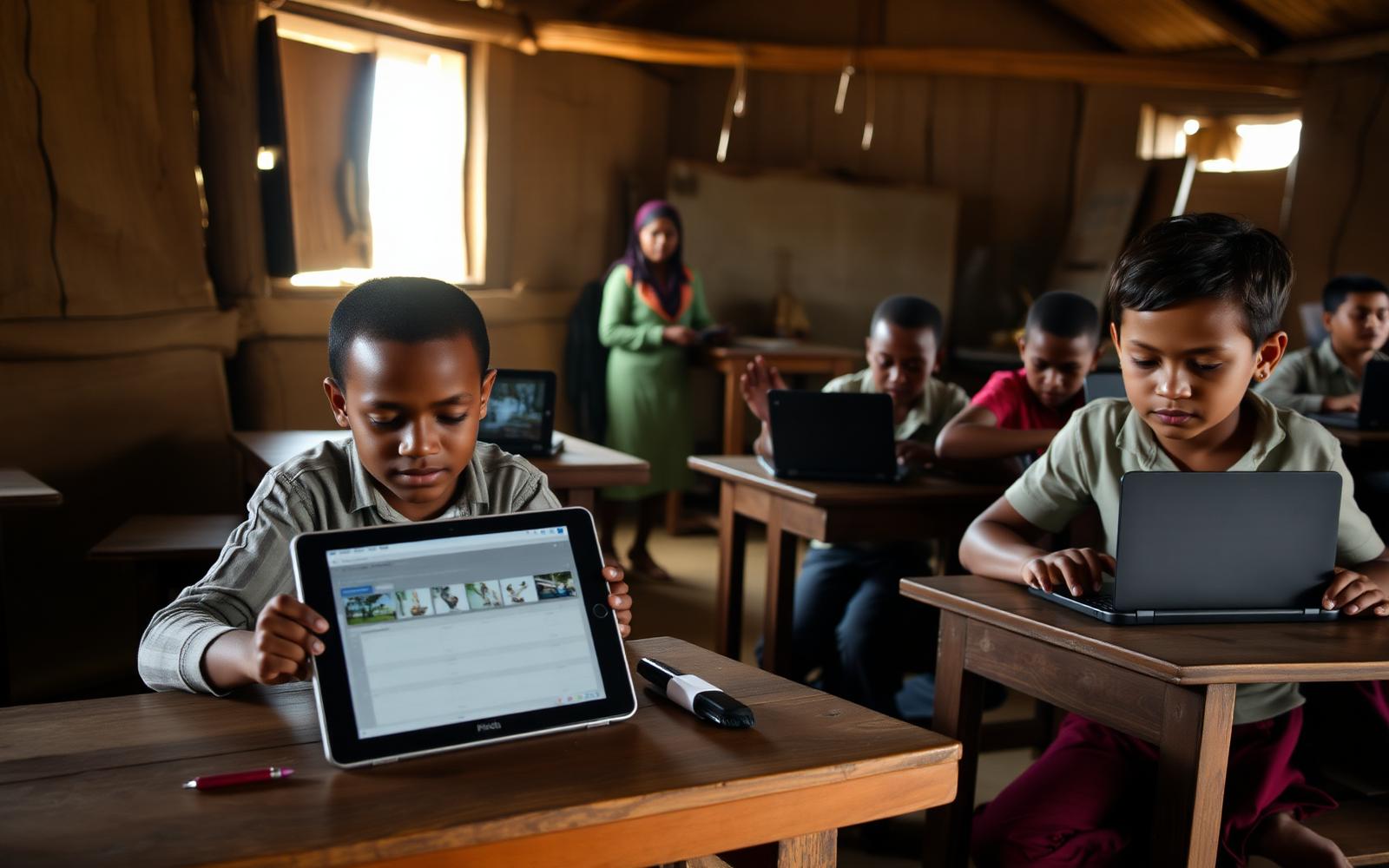
And because that system is offline-first, the picture is not limited to the schools that happen to have signal. Intelligence runs on the hardware already in the classroom and syncs when a connection is available, so the returns from the school four hours past the last cell tower reach the national view on the same terms as the capital's. The ministry sees the whole country, not the connected half of it.
“A national education system that can only see its easiest schools has, in practice, decided to improve only those.”
What that gives a ministry is the ability to act while it still matters. The subject slipping across a region, the school whose results are quietly drifting, the cohort that needs support this term rather than a post-mortem in three years — these become visible early enough to do something about. Sovereignty matters here too: because the country owns the platform and the data it produces, this picture is a national asset the ministry can build policy on, not a report it has to request from a vendor and hope is complete.
The dignity of a national system is not only in what it delivers to a child. It is in whether the system can see that child at all — the one in the hardest classroom, whose progress has always been the last to be counted and the first to be lost. A country that can see clearly can act fairly. That is what one integrated, nationally-owned, offline-first platform is actually for.
If you are responsible for a national programme and you are tired of steering it from a picture that is months old and half the country wide, that is the conversation NDX is built for. See how it works, or start that conversation, at ndx.education.