
Digital Education Should Belong to the Country That Runs It
The hardest question in digital education isn't whether a programme launches well. It's whether the school system owns what it's left with. A platform a country controls keeps working; a platform it merely rents can be switched off from the outside — and too often is.
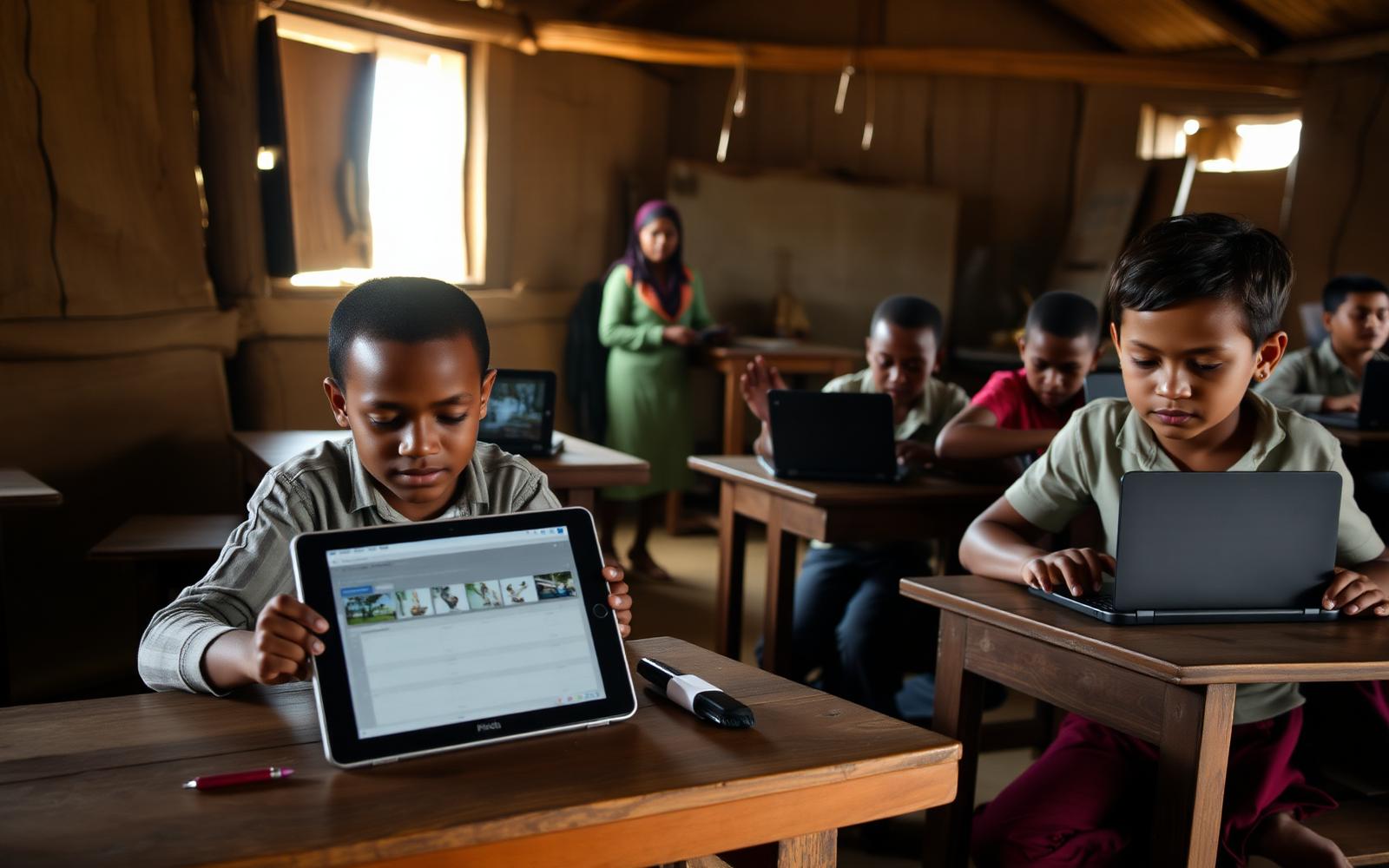
Most conversations about education technology stop at the launch: the devices delivered, the first teachers trained, the classroom that lights up for the cameras. That's the easy part. The harder truth is what a school system is actually left holding once the attention and the funding move on — and whether it's something the country owns, or something it has merely borrowed.
The distinction decides everything. A system a country owns is one it can keep running, adapt, and build on. A system it rents — hosted on a distant server, licensed on someone else's terms, dependent on a support contract and a vendor's roadmap — is a system that can be slowed, changed, or switched off by a decision made far outside the ministry. It can look identical to the owned version on launch day. A year later, it rarely is.
This is the problem NDX is built to solve, and it shapes what we deliver rather than sitting alongside it as a slogan.
We deliver an integrated system, not a bundle of apps to be stitched together and separately renewed. Attendance, learning, assessment, and content sit on one foundation, so a teacher enters information once and a ministry sees one coherent picture instead of twenty disconnected dashboards.
We build it offline-first, because much of the learning that matters happens beyond reliable connectivity. The intelligence runs on the hardware physically present in the school and keeps teaching whether or not the network, the contract, or the vendor is still reachable that day. Continuity is not a premium feature; it is the baseline.
We align it to the national curriculum and leave the country in control of the pieces that matter — the data, the content, the ability to update what's taught without asking anyone's permission. Sovereignty here is not a talking point. It is the practical difference between a capability a nation has built and a dependency it is paying to maintain.
And we treat teacher capability as part of the system, not a one-time event. The first cohort is always trained well. The programmes that endure assume turnover — teachers move, retire, transfer — and build training that renews locally, so the second and third cohorts are as capable as the first.
Owning hardware, software, the AI continuity beneath it, and the way it all connects is a harder thing to deliver than reselling someone else's platform. It is also the only version that a ministry can still rely on in five years — in the school with no signal, under the budget that tightened, after the launch that everyone has stopped talking about.
That permanence is where the dignity of a national education system lives: in a child who can count on the same learning environment next year, and the year after. A rented platform can promise that. Only an owned one can keep the promise. That is the difference NDX is built to deliver.